
TL;DR:
- European households can significantly save energy by upgrading efficient devices and adjusting settings.
- Using smart plugs, monitoring tools, and reviewing device configurations regularly optimizes energy use.
- Most savings come from post-purchase adjustments and routine maintenance, not just buying new electronics.
Energy bills are climbing across Europe, and many households are running devices that quietly drain power around the clock. The good news is that optimizing your electronics does not require a full renovation or a large budget. With the right knowledge, a few smart upgrades, and some adjustments to daily habits, you can meaningfully improve both your home's comfort and its energy performance. This guide walks you through assessing what you already own, choosing better devices, setting them up correctly, and verifying that your efforts are actually paying off.
Table of Contents
- Assess your current electronics and energy use
- Select energy-saving devices and smart solutions
- Set up and optimize devices for your living situation
- Monitor, troubleshoot and ensure ongoing optimization
- Why most people underestimate electronics optimization
- Enhance your home with the right electronics
- Frequently asked questions
Key Takeaways
| Point | Details |
|---|---|
| Know your devices | Assess all electronics and their energy ratings before starting optimization. |
| Choose smart and efficient | Select devices with high EU energy labels and proven low standby consumption. |
| Adapt setup for your lifestyle | Renters and homeowners need different approaches for easy and effective device upgrades. |
| Continuous improvement | Monitor, troubleshoot, and update devices regularly to maintain optimal efficiency. |
Assess your current electronics and energy use
Before making any changes, you need a clear picture of what you are working with. Start by listing every significant electronic device in your home. This includes your TV, router, washing machine, dishwasher, refrigerator, smart speakers, and any smart home hubs or sensors you may have installed.
Once you have your list, check the power rating on each device. This is usually printed on a label at the back or bottom of the unit, expressed in watts (W). Pay close attention to standby consumption, which is the power a device draws even when you think it is off. Many older appliances consume 5 to 15 watts in standby mode continuously, adding up to significant costs over a year.
Here is a quick overview of typical energy use for common household devices:
| Device | Active power (W) | Standby power (W) |
|---|---|---|
| LED TV (50 inch) | 70 to 100 | 0.3 to 2 |
| Wi-Fi router | 6 to 20 | 6 to 20 (always on) |
| Washing machine | 1,000 to 2,000 | 1 to 5 |
| Smart speaker | 2 to 15 | 1 to 3 |
| Older refrigerator | 100 to 400 | N/A (always on) |
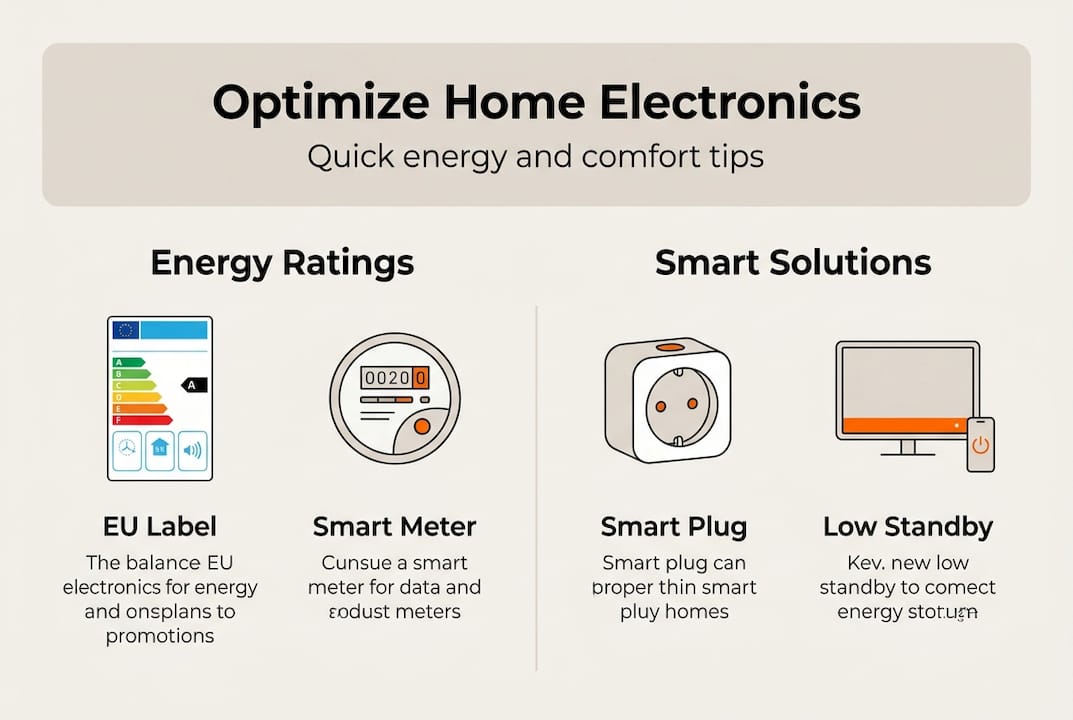
To make informed purchasing decisions, use the EU Energy Label, which rates appliances from A (most efficient) to G (least efficient). The EPREL database is the official EU registry where you can look up the exact energy performance of any labeled product before you buy. According to EU projections, ecodesign regulations and the Energy Label together could deliver €473 to €736 per household in annual savings by 2030. That is a substantial number worth taking seriously.
For a broader look at which products perform best, our energy efficient electronics overview covers top-rated options across categories. You can also consult our electronics buying guide for structured advice on what to prioritize when shopping.
Pro Tip: Plug a smart energy meter into your wall socket and connect your device to it. These inexpensive tools show real-time and cumulative consumption, making it easy to spot energy hogs you might otherwise overlook.
Select energy-saving devices and smart solutions
Once you know your baseline, the next step is upgrading to smarter, more efficient devices. Not every appliance needs replacing right away, but knowing which ones offer the biggest efficiency gains helps you prioritize your spending.
Here is a side-by-side comparison of traditional versus energy-saving models across three common categories:
| Device | Traditional model | Energy-saving model | Annual saving (est.) |
|---|---|---|---|
| 50-inch TV | 150W active, 3W standby | 80W active, 0.3W standby | €15 to €30 |
| Wi-Fi router | 18W continuous | 8W with scheduling | €10 to €20 |
| Washing machine (A vs. E) | 1,800W per cycle | 900W per cycle | €40 to €80 |
When selecting a new device, follow these steps to make the best choice:
- Check the EU Energy Label. Look for A-rated models where available. For categories like washing machines and refrigerators, even moving from a D to a B rating makes a measurable difference.
- Search the EPREL database. Every labeled product sold in the EU has an entry. Compare energy consumption figures directly rather than relying on marketing claims.
- Evaluate smart features. Devices with scheduling, auto-off, or energy monitoring built in are worth the extra cost because they reduce waste automatically.
- Read user reviews for real-world data. Lab ratings are useful, but actual household consumption can differ. Look for reviews that mention energy use specifically.
- Consider total cost of ownership. A cheaper appliance with a lower efficiency rating often costs more over its lifespan than a pricier, efficient model.
One area where EU regulation is making a direct impact is standby power. New EU ecodesign rules cap standby consumption at 0.50W for devices in off mode and 0.80W for standby mode. Networked standby is capped at 8W, dropping to 7W in 2027. These rules are projected to save 4 TWh per year by 2030, translating to roughly €530 million in annual consumer savings across the EU. That is the kind of systemic change that benefits every household automatically, as long as you choose compliant products.
For more guidance on building a smarter home, our smart appliances guide breaks down the best options by room. You can also explore smart electronics tips for practical setup advice tailored to European homes.
Set up and optimize devices for your living situation
Having selected efficient electronics, setup and everyday use matter just as much for sustainable results. A well-chosen device that is poorly configured can still waste energy and underperform.
For most renters and homeowners alike, plug-and-play solutions are the safest and most flexible starting point. Here is what works well without requiring any permanent changes:
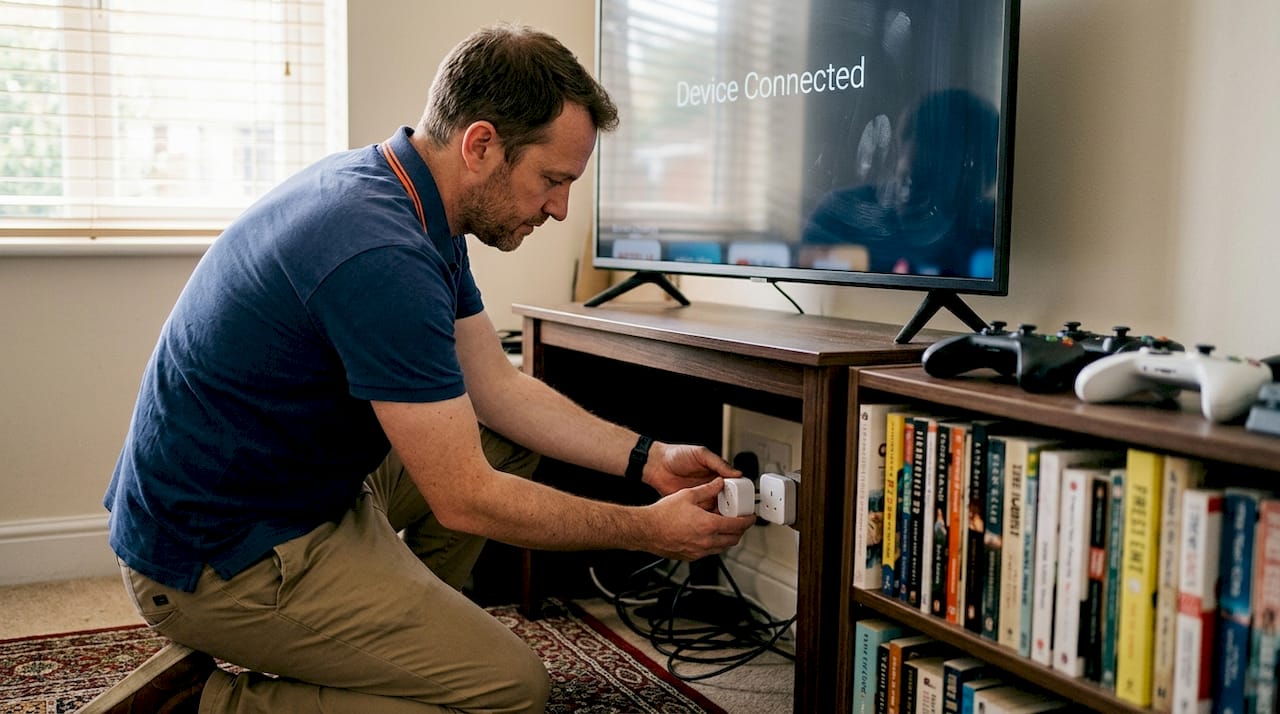
- Smart plugs with scheduling and energy monitoring let you cut standby power automatically and track consumption per device.
- Smart LED bulbs replace standard bulbs without any wiring changes and can be controlled via app or voice.
- Battery-powered sensors for motion, temperature, and door contact work without drilling or running cables.
- Portable Wi-Fi routers or mesh nodes can be repositioned freely as your needs change.
- Smart power strips with individual socket control help manage entertainment systems and home office setups efficiently.
For network setup, consider segmenting your IoT (Internet of Things) devices onto a separate Wi-Fi network from your main computers and phones. This improves both security and network performance. Most modern routers support a guest network that you can dedicate to smart home devices.
"Renters should always get written permission for semi-permanent installations." This applies to anything that involves drilling, mounting brackets, or modifying electrical fixtures. A quick email to your landlord creates a paper trail and protects you from disputes later.
If you are renting, the smart home for renters guide offers detailed advice on staying within lease boundaries while still building a capable smart home setup. The key principle is to avoid anything that cannot be undone when you move out.
Pro Tip: Choose devices that support the Matter or Thread protocols. These open standards ensure your smart home gear works across different ecosystems and remains compatible with future upgrades, whether you stay in your current home or move to a new one.
For long-term reliability, our tips on how to maintain electronics cover cleaning schedules, firmware updates, and storage practices that extend device lifespan significantly.
Monitor, troubleshoot and ensure ongoing optimization
Once your devices are installed and optimized, making sure they stay efficient requires ongoing attention. Efficiency is not a one-time achievement. It is a habit.
Here are the best tools and methods for tracking your home's energy use:
- Smart energy meters (clip-on or plug-in) give real-time data on consumption at the device or circuit level.
- Utility provider apps often include monthly breakdowns and comparisons to similar households.
- Smart home hub dashboards (such as those in Google Home, Apple Home, or Home Assistant) aggregate device data in one place.
- Dedicated energy monitoring apps like Sense or Emporia can identify individual appliances by their power signature.
- Annual energy audits using your meter readings compared to previous years reveal long-term trends.
When something seems off, work through these troubleshooting steps before assuming a device is faulty:
- Check connectivity first. A device that repeatedly reconnects to Wi-Fi consumes more power than one with a stable connection.
- Review automation schedules. Timers and routines can drift or conflict after app updates, causing devices to run at unintended times.
- Update firmware. Manufacturers regularly release updates that fix bugs, improve efficiency, and patch security vulnerabilities. Skipping these is one of the most common mistakes homeowners make.
- Audit standby settings. Some devices reset to factory defaults after a power outage. Check that your low-power settings are still active.
- Replace aging devices proactively. An appliance more than ten years old is likely consuming far more energy than a modern equivalent, even if it still works.
Common mistakes that undermine long-term optimization include ignoring device settings after initial setup, missing firmware updates, keeping outdated appliances with high standby draw, and failing to review automation rules after moving furniture or changing routines.
With the right device choices and consistent monitoring, EU projections suggest households can achieve €473 to €736 in annual savings by 2030. Reaching that figure requires both smart purchasing and active management. Our articles on saving on electronics and the electronics purchase steps workflow offer additional frameworks for staying on track.
Why most people underestimate electronics optimization
Most European households approach efficiency the same way: buy a new appliance, feel good about it, and move on. The problem is that purchasing is only part of the equation. The bigger gains often come from what happens after the device is plugged in.
We have seen cases where a family reduced their monthly electricity bill noticeably without replacing a single appliance. They simply set up smart scheduling on their washing machine, adjusted their router's power-saving mode, and turned off their TV's "quick start" feature. These are settings that exist in devices most people already own, yet they go untouched for years.
The uncomfortable truth is that factory default settings are rarely optimized for efficiency. They are optimized for convenience and fast startup times. Manufacturers prioritize the out-of-box experience, not your electricity bill.
Routine checks matter as much as hardware. Spending 20 minutes every few months reviewing your device settings, checking for firmware updates, and scanning your energy monitor data will consistently outperform a one-time upgrade with no follow-through. The advantages of modern electronics are only fully realized when you actively use the features built into them.
Enhance your home with the right electronics
With all these tips in hand, finding efficient devices and smart accessories is the easy next step. At Online-Store24, we stock a carefully selected range of energy-saving and smart home electronics sourced from trusted EU distributors, with fast delivery across Europe.

Whether you are looking for networking gear like the Trendnet access point for better Wi-Fi coverage, kitchen accessories such as Kenwood accessories to complement your appliances, or simply want to browse our full catalog of compliant, efficient products, you will find practical options at competitive prices. Visit Online-Store24 to explore energy-saving devices that fit your home and budget.
Frequently asked questions
What is the EPREL database and how does it help optimize electronics?
The EPREL database is the EU's official registry of energy-labeled products, listing verified performance data for appliances sold across Europe. You can use it to compare efficiency ratings before purchasing, ensuring you choose devices that genuinely meet EU standards rather than relying on marketing claims.
Are there special steps renters should take to optimize electronics?
Yes. Renters should prioritize plug-and-play devices like smart plugs, LED bulbs, and battery sensors, and avoid any installation that involves drilling or rewiring. Using Matter/Thread compatible devices also ensures your setup moves with you when you change homes.
How much can I save by reducing standby power usage?
Following EU ecodesign standby limits, the collective impact across Europe is projected to save 4 TWh per year by 2030, worth roughly €530 million in consumer savings. For individual households, cutting standby waste across multiple devices can add up to tens of euros annually.
What are the most common mistakes when optimizing home electronics?
The most frequent mistakes are leaving factory default settings unchanged, skipping firmware updates, and holding onto older appliances with high standby consumption. These oversights quietly erode the efficiency gains you would otherwise achieve with newer, compliant devices.