
Buying new electronics feels exciting right up until you realize the "50% off" deal you grabbed was priced up two weeks before the sale. EU shoppers lose real money every year to inflated pre-sale prices, misleading energy ratings, and cheap devices that fail within 18 months. The good news: a few proven strategies, from timing your purchases to going certified refurbished, can cut your electronics spending significantly without forcing you to settle for inferior gear. This guide walks you through exactly how to do it.
Table of Contents
- Set your savings strategy: Key criteria before you shop
- Time your purchases: Finding the best deals during sales events
- Go refurbished: Save without sacrificing quality
- Prioritize energy-efficient and sustainable electronics
- Trade-in and sell: Offset new purchases by cashing in old devices
- Side-by-side: Comparison of savings methods for EU shoppers
- Upgrade smarter with trusted EU deals from OnlineStore24
- Frequently asked questions
Key Takeaways
| Point | Details |
|---|---|
| Always check price history | Genuine discounts are rare and price tracking tools help you avoid inflated deals. |
| Refurbished equals value | Certified refurbished products provide big savings and warranties for less risk. |
| Go for energy efficiency | The cheapest appliance is usually not the best—look for EU efficiency ratings to save money long-term. |
| Trade-in old tech | Selling or trading your old gadgets offsets the cost of your next upgrade. |
| Combine strategies for max savings | Using several methods together yields the greatest overall savings on electronics. |
Set your savings strategy: Key criteria before you shop
Before you click "add to cart" on anything, you need a checklist. Not a vague one. A real set of criteria that filters out bad deals before they cost you money. The advantages of consumer electronics are real, but only when you buy the right products at the right price.
Here is what to evaluate before every electronics purchase:
- Price history: Never trust the "was/now" label. Use a price tracking tool to verify what the product actually sold for over the past 90 days.
- Energy certification: Look for EU energy labels. A more efficient model costs less to run every month, which matters more than a one-time discount.
- Brand reputation and EU support: A cheap brand with no local warranty or service center is a liability, not a bargain.
- Warranty coverage: Confirm the warranty is valid in your country. Some deals ship from outside the EU with no local support.
- Source credibility: Stick to established EU retailers or official brand stores. If the price looks impossible, it probably is.
Pro Tip: Pre-sale price hikes are common on major platforms. A product listed at "40% off" during Prime Day may simply be back to its regular price from two months earlier. Always check the 90-day price history before trusting any sale badge.
Reading up on a sustainable electronics guide can also help you identify which product categories hold their value and which ones depreciate fast. With a strong set of criteria in mind, the next step is knowing exactly when and where to find the best deals.
Time your purchases: Finding the best deals during sales events
Timing is one of the most underused savings tools available to EU shoppers. Most people buy when they need something. Smart shoppers buy when the price is right, then plan around that.
Here is when genuine discounts are most likely:
- Black Friday (November): The biggest electronics sale event of the year. Genuine deals exist, but so do fake ones. Always verify with price history.
- Prime Day (July): Good for Amazon-ecosystem products. Less reliable for appliances and TVs.
- January clearances: Often overlooked, but January post-holiday sales can offer better discounts on last year's models than Black Friday ever did.
- End-of-model-year cycles: When a new TV or laptop line launches, the previous generation drops in price fast.
Statistic to know: Analysts consistently find that January clearance prices on large-screen TVs beat Black Friday prices by 10 to 20 percent, especially on 55-inch and larger models.
One important warning: avoid TVs and large appliances priced suspiciously below market floors. For TVs, anything under €300 for a 50-inch or under €550 for a 65-inch from an unknown brand is a red flag. You will likely pay more in repairs or replacements within two years. Knowing how to handle maintaining electronics for longer life also helps you stretch the value of whatever you buy. Once you know when to shop, it pays to focus on what and where you buy to get the most value.
Go refurbished: Save without sacrificing quality
The word "refurbished" still makes some shoppers nervous. It should not. Certified refurbished electronics from official sources go through rigorous testing, cosmetic inspection, and component replacement before they are resold. They are not broken products with a new label.
Here is what you get with certified refurbished:
- Savings of 20 to 40 percent compared to new retail prices, sometimes more on premium brands
- Warranty coverage that mirrors new product guarantees in many cases
- Tested performance that meets the original manufacturer's specifications
- Lower environmental impact by extending the product lifecycle
"Refurbished products from official sources offer the best value-to-risk balance for EU consumers looking to upgrade their home technology."
Pro Tip: Always buy refurbished from the manufacturer's own certified program or from a well-known EU retailer with a clear returns policy. Avoid third-party sellers on open marketplaces unless they carry verified seller ratings and explicit warranty terms.

For eco-conscious buyers, refurbished is also the smarter environmental choice. Pairing that mindset with an eco friendly gadgets guide helps you build a home tech setup that is both affordable and responsible. If you want a broader look at what products are worth upgrading, the modern home electronics guide is a solid starting point. If your goal is smart savings and future-proof technology, energy efficiency should also be a top priority.
Prioritize energy-efficient and sustainable electronics
A lower sticker price is not always a better deal. An appliance that costs €80 less upfront but draws 40 percent more power will cost you more within two years. Energy efficiency is a savings strategy, not just an environmental preference.
Key things to look for:
- EU energy label ratings: The A-scale (A, B, C) replaced the old A+++ system. Aim for A or B-rated appliances.
- Lifecycle cost estimates: Some retailers now show estimated annual running costs. Use them.
- Heat pump technology: Heat pump dryers cost more upfront but cut drying energy use by up to 60 percent compared to condenser models.
- Smart standby features: Devices that cut standby power automatically save 5 to 15 euros per year each, and it adds up across a full home.
| Appliance type | Avg. extra upfront cost | Est. annual savings | Payback period |
|---|---|---|---|
| Heat pump dryer | €150 to €250 | €60 to €90 | 2 to 3 years |
| A-rated dishwasher | €80 to €150 | €30 to €50 | 2 to 4 years |
| Energy-efficient TV | €50 to €100 | €15 to €30 | 3 to 4 years |
| Smart thermostat | €100 to €180 | €80 to €150 | 1 to 2 years |
For the kitchen specifically, smart kitchen appliances combine efficiency with convenience in ways that older models simply cannot match. And if you want to understand the full picture of sustainable buying, revisit the sustainable electronics guide for deeper context. Maximizing savings is not just about buying smarter. Sometimes it is about turning old tech into cash.
Trade-in and sell: Offset new purchases by cashing in old devices
Most EU households have at least one drawer full of old phones, tablets, or small gadgets that still have real monetary value. That value disappears fast as devices age, so acting sooner rather than later matters.
Here is a step-by-step approach to getting the most from your old electronics:
- Assess what you have. Working devices in good condition fetch significantly more than broken ones. Check screens, batteries, and charging ports.
- Wipe your data completely. Factory reset every device and remove your accounts before listing or handing it over.
- Compare your options. Trade-in programs from Apple, Samsung, and major EU retailers offer instant credit. eBay and local platforms often yield 15 to 25 percent more cash.
- Photograph everything. Clear photos of the device and any accessories increase buyer confidence and reduce disputes.
- Check EU-specific buyback platforms. Sites like Back Market, Swappie, and local classifieds sometimes offer better rates than global marketplaces for certain device categories.
Pro Tip: If you are upgrading a smartphone, time your trade-in before the new model launches. Trade-in values for older iPhones and Samsung flagships drop noticeably within weeks of a new release announcement.
For a broader look at how devices fit into your home ecosystem, the consumer electronics guide helps you decide what is worth replacing versus keeping. With savings strategies in place, it is easier to weigh different buying options side by side and make the best decision.
Side-by-side: Comparison of savings methods for EU shoppers
Not every strategy works equally well for every buyer. Here is a quick reference to help you match the right approach to your situation. Combining strategies like price tracking, refurbished buying, and trade-ins together delivers the maximum total savings.
| Strategy | Best for | Upfront savings | Long-term savings | Effort level |
|---|---|---|---|---|
| Price tracking | All buyers | High | Medium | Low |
| Seasonal timing | Planned purchases | High | Low | Low |
| Certified refurbished | Budget-conscious buyers | Very high | Medium | Low |
| Energy-efficient models | Long-term planners | Low | Very high | Medium |
| Trade-in / sell old gear | Upgraders | Medium | Medium | Medium |
| Combining all methods | Power savers | Maximum | Maximum | Medium |
For a structured approach to every category of purchase, the electronics buying guide breaks down what to look for product by product. The table above makes one thing clear: no single strategy wins every time. The buyers who save the most combine at least two or three of these approaches on every major purchase.
Upgrade smarter with trusted EU deals from OnlineStore24
You now have a full toolkit for buying electronics without overpaying. The next step is finding a retailer that actually supports these strategies rather than working against them.
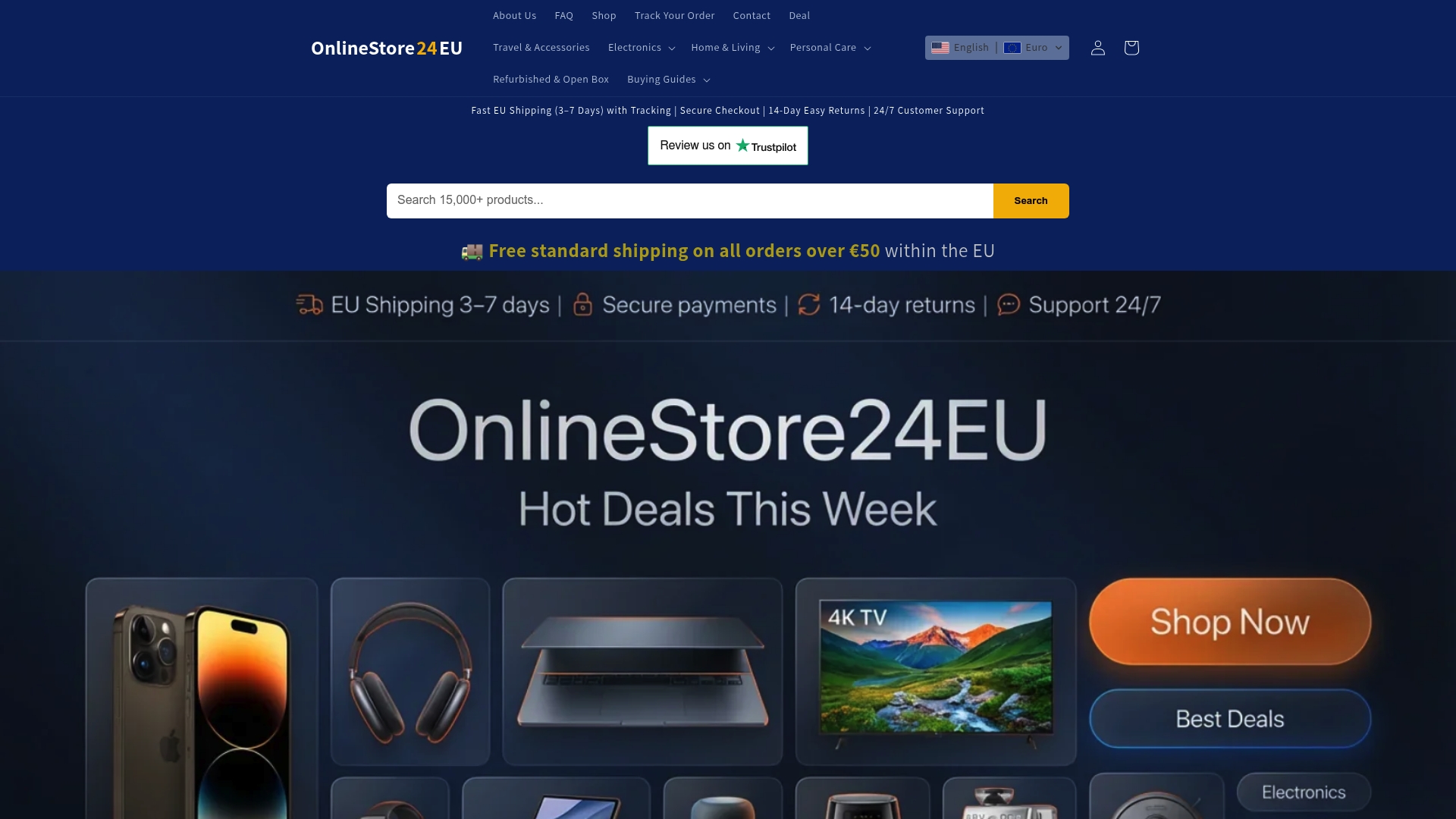
At OnlineStore24, we stock a wide range of energy-efficient appliances, certified electronics, and competitively priced tech accessories, all sourced from established European distributors and fulfilled from EU-based warehouses. Every product comes with EU-compliant warranty coverage so you are protected from day one. Whether you are looking for a reliable networking upgrade like the access point Trendnet TEW-821DAP or a versatile tablet such as the TCL NXTPAPER tablet, you will find real value backed by transparent pricing and fast EU delivery. Browse our catalog and put these savings strategies to work today.
Frequently asked questions
How can I make sure a discount on electronics is real and not just marketing?
Use price tracking tools like CamelCamelCamel or Slickdeals to check the product's price history before buying. If the "sale" price matches the regular price from two months ago, it is not a real discount.
Are refurbished electronics safe and reliable to buy in the EU?
Yes, when purchased from official certified sources, refurbished electronics are thoroughly tested, come with warranties, and deliver performance that matches new devices at a fraction of the cost.
What's the best way to sell or trade in old electronics for cash or credit?
Compare manufacturer trade-in programs with open marketplaces like eBay, always wipe your device data completely before selling, and act before new model announcements drop your device's resale value.
Do energy-efficient appliances in the EU really save money long-term?
Energy-efficient models like heat pump dryers typically recover their higher upfront cost within two to four years through lower monthly energy bills, making them a net saving over their lifespan.
Is there a best time of year to buy electronics in the EU?
Black Friday and January post-holiday clearances offer the most consistent genuine discounts, but always verify price histories to confirm the deal is real before committing.
Recommended
- Maintain home electronics for longer life in Europe 2026
- Advantages of consumer electronics for European homes 2026 | OnlineStore24 EU - Envío Rápido
- Best Electronics for Modern Homes in Europe: Complete 2026 Buying Guide – OnlineStore24 EU
- Best Electronics for Modern Homes in Europe (2026 Guide) – OnlineStore24 EU