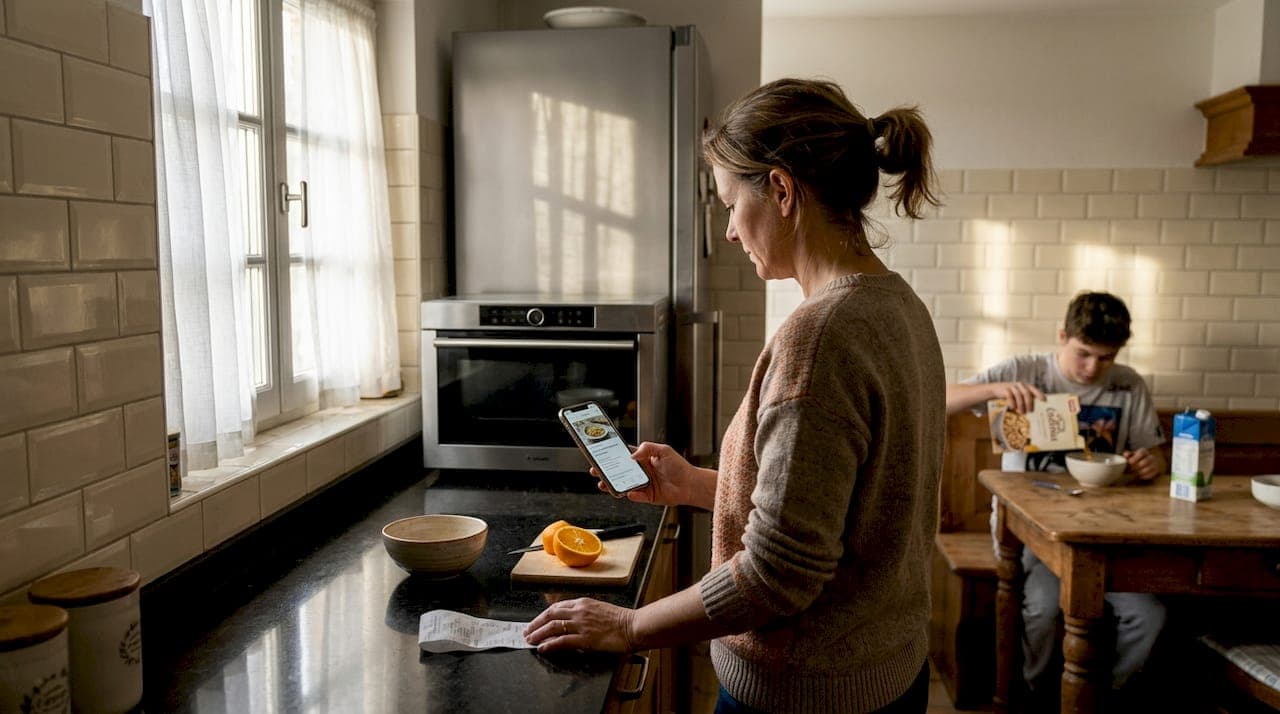
Many European consumers assume that any appliance with a Wi-Fi connection qualifies as a smart appliance. That assumption leads to disappointing purchases and missed savings. True smart appliances go far beyond simple connectivity, offering autonomous operation, energy reporting, and real-time decision-making that genuinely transforms how your home runs. This guide breaks down exactly what makes an appliance truly smart, which EU standards matter when you shop, how much energy you can realistically save, and what pitfalls to avoid so you can make confident, informed choices.
Table of Contents
- What makes an appliance truly 'smart'?
- How smart appliances work: Key technologies and standards
- Real-world benefits: Energy savings, convenience, and automation
- Challenges and realities: Security, privacy, and energy efficiency pitfalls
- Smart appliances in action: Integration, choosing, and future trends
- Upgrade your home with certified smart appliances
- Frequently asked questions
Key Takeaways
| Point | Details |
|---|---|
| Not all devices are 'smart' | Smart appliances must sense, communicate, and act autonomously, not just connect online. |
| Look for EU standards | Check for compliance with CEN/CENELEC, Ecodesign (ESPR), and EU Energy Label when purchasing. |
| Real savings are possible | Properly used smart appliances can cut energy bills and carbon footprint significantly. |
| Balance benefits and trade-offs | Be aware of potential privacy, security, and standby energy risks with any smart device. |
| Plan for the future | Choose appliances with Matter/Zigbee and local execution for best interoperability and efficiency. |
What makes an appliance truly 'smart'?
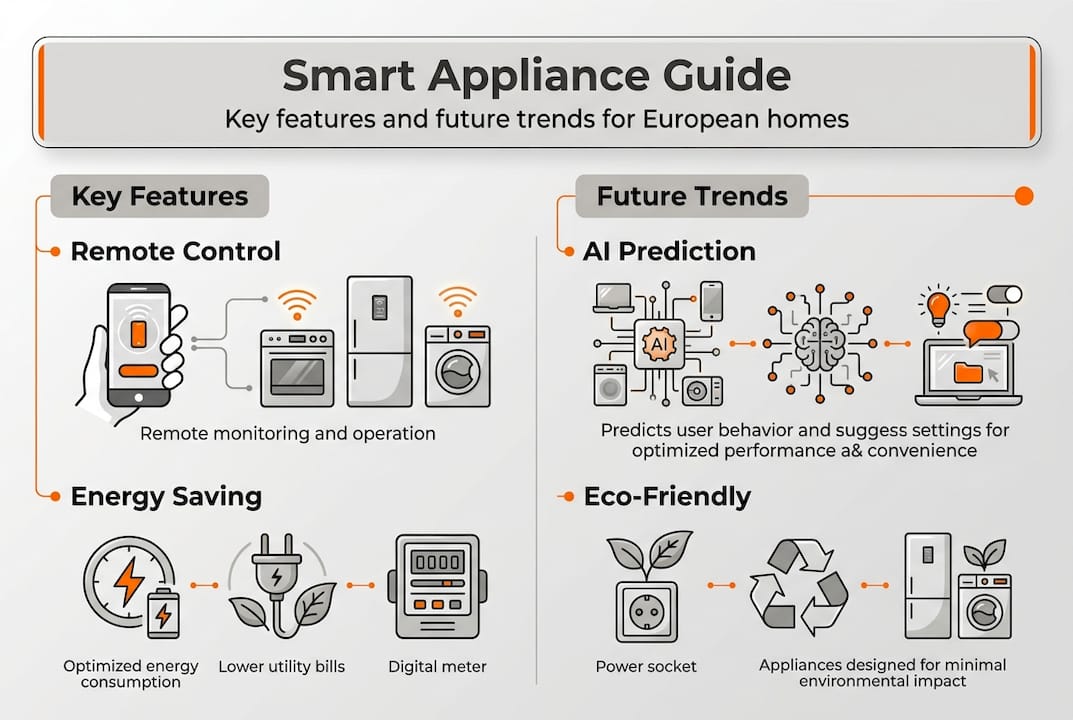
The term "smart appliance" gets used loosely, but the definition is precise. A smart appliance is a household appliance equipped with computing capabilities for sensing, actuating, communicating, remote control, monitoring, and energy reporting. That last part matters. Sensing and actuating mean the device reads its environment and responds automatically, without you pressing a button.
A basic connected appliance lets you control it remotely via an app. A truly smart appliance goes further: it learns usage patterns, adjusts its own behavior, and can communicate with other devices in your home. Think of a washing machine that delays its cycle until off-peak electricity hours, or a refrigerator that alerts you when a component is about to fail. That level of autonomy is what separates smart from simply connected.
Protocols are the language these devices speak. Wi-Fi offers broad range and speed. Zigbee and Z-Wave are low-power mesh protocols ideal for sensors and switches. Matter, the newest open standard, is designed to make devices from different brands work together seamlessly. Understanding these protocols helps you build a smart home that actually functions as one system rather than a collection of isolated gadgets. You can explore how these technologies apply to smart kitchen appliances and get a broader overview in our smart home devices guide.
| Feature | Connected appliance | Smart appliance |
|---|---|---|
| Remote control | Yes | Yes |
| Autonomous operation | No | Yes |
| Energy reporting | Rarely | Standard |
| AI/learning capability | No | Often included |
| Protocol support | Wi-Fi only | Wi-Fi, Zigbee, Matter |
| Inter-device communication | Limited | Full ecosystem |
"The distinction between connected and smart is autonomy. A device that only responds to commands is a remote-controlled appliance. A device that acts on its own based on data is a smart appliance." — IoT industry consensus
How smart appliances work: Key technologies and standards
IoT, or the Internet of Things, is the framework that connects smart appliances to each other and to the internet. Each device has embedded sensors and a communication module. Data flows between the appliance, a local hub or router, and sometimes a cloud server. The choice of protocol determines how reliable, secure, and energy-efficient that data flow is.
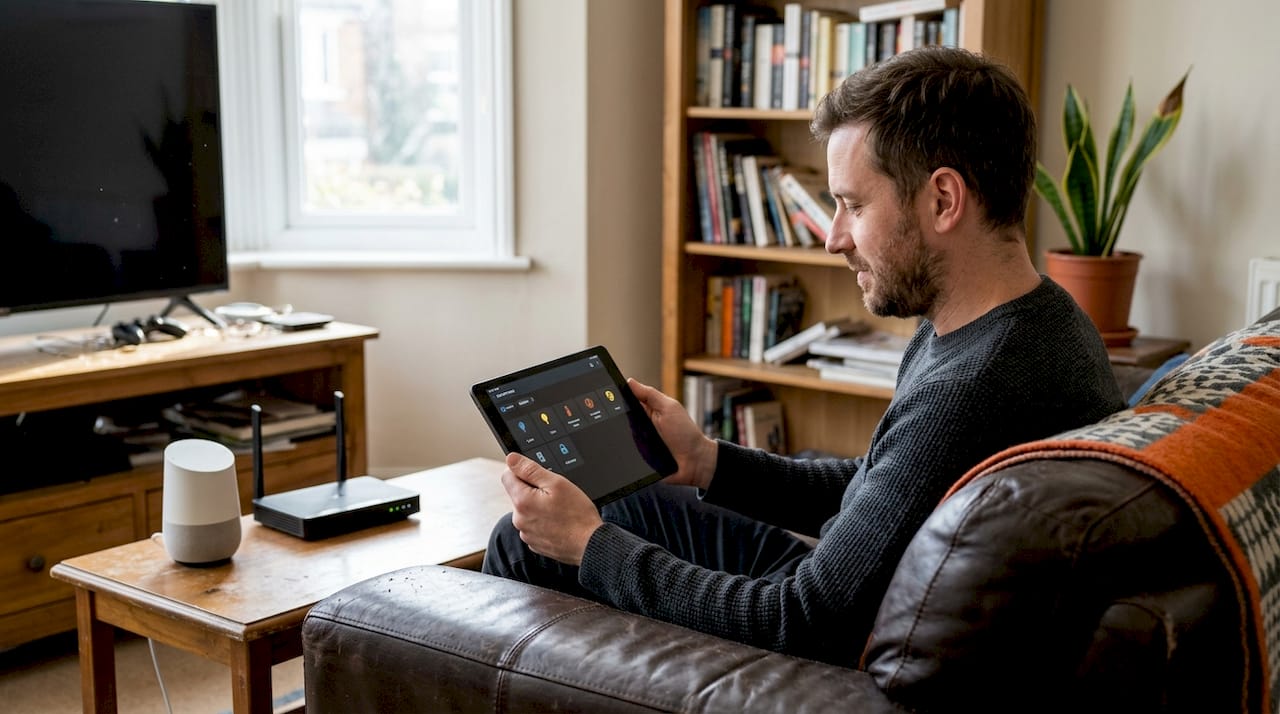
When shopping for smart appliances in Europe, EU standards from CEN/CENELEC, Ecodesign (ESPR), and the Energy Labelling regulation are the benchmarks you should check first. These standards cover safety, performance, and environmental impact.
What to look for when buying a smart appliance:
- Energy label rating: Look for A or B on the EU A-G scale for best efficiency
- EPREL registration: The EU product database confirms compliance and energy data
- Protocol compatibility: Prefer Matter, Zigbee, or Z-Wave for interoperability
- Local vs. cloud control: Devices that process data locally are faster and more private
- Software update commitment: Manufacturers should guarantee updates for at least 5 years
- Interoperability: Check compatibility with Google Home, Amazon Echo, or Apple HomeKit
Pro Tip: Prioritize appliances that support local execution, meaning they process commands on-device or via a local hub rather than routing everything through a cloud server. Local-first devices respond faster, work during internet outages, and expose far less of your personal data to third parties.
| Standard/label | What it covers | Why it matters |
|---|---|---|
| EN 60335 | Electrical safety | Mandatory for EU market |
| ESPR (2024/1781) | Ecodesign requirements | Sustainability and repairability |
| EU Energy Label (A-G) | Energy efficiency rating | Easy comparison at point of sale |
| EPREL database | Product registration | Verified compliance data |
For a wider look at how these standards affect your purchasing decisions, see our guide on the advantages of consumer electronics and our best electronics for modern homes resource.
Real-world benefits: Energy savings, convenience, and automation
The numbers are compelling. Smart thermostats and appliances enable 5 to 15% energy savings for typical users, and EU ecodesign regulations are projected to deliver household savings of €473 to €736 per year by 2030. That is not a marginal improvement. For a family running a full set of smart appliances, those savings add up to a meaningful reduction in annual bills.
Beyond the numbers, the practical convenience is just as valuable. Smart appliances let you automate routines that previously required constant attention. Here is a real example of how a smart morning routine works:
- Your smart alarm triggers at 6:30 a.m. and signals the coffee maker to start brewing
- The smart thermostat raises the temperature in the kitchen 10 minutes before you wake
- The smart oven preheats automatically based on a scheduled breakfast recipe
- Your phone receives a notification when coffee is ready and the oven has reached temperature
- The dishwasher, loaded the night before, runs its cycle during off-peak electricity hours
This kind of automation is not futuristic. It is available today with devices that support Matter or Zigbee and a compatible hub. The EU appliance energy impact data confirms that coordinated appliance use is one of the most effective ways households can reduce their carbon footprint.
"Coordinated smart appliance use, especially when tied to dynamic electricity pricing, represents one of the highest-impact actions a household can take for energy reduction." — EU Energy Commission analysis
For more context on why these devices are gaining traction across Europe, read about why smart devices are trending and check our electronics buying guide for product recommendations.
Challenges and realities: Security, privacy, and energy efficiency pitfalls
Not every smart appliance lives up to its label. Cloud-dependent devices can introduce latency of 1 to 4 seconds, standby power draw of 0.8 to 2.3 watts, and security vulnerabilities including firmware exploits and data privacy exposure. These are real trade-offs that deserve attention before you buy.
The cognitive load is another underrated issue. Managing multiple apps, firmware updates, and compatibility checks across a dozen devices can become genuinely time-consuming. More devices does not always mean a smarter home.
Common pitfalls and how to avoid them:
- High standby consumption: Check the product's EPREL listing for verified standby wattage before purchasing
- Cloud dependency: Choose devices that support local control via a hub like Home Assistant
- Weak security: Only buy from brands with a published security update policy and CVE response process
- App fragmentation: Stick to ecosystems that support Matter to reduce the number of apps you need
- Premature obsolescence: Confirm the manufacturer commits to software support for at least 5 years
- Privacy exposure: Review the device's data sharing policy and opt out of non-essential telemetry
Pro Tip: Before purchasing, search the product name alongside "standby power" and "security vulnerabilities" to find independent test results. Reputable review sites and the appliance security risks database publish verified findings that manufacturer spec sheets often omit.
For guidance on choosing products that balance performance with environmental responsibility, see our article on eco-friendly gadgets and tips on how to maintain home electronics for a longer lifespan.
Smart appliances in action: Integration, choosing, and future trends
Getting smart appliances to work together requires a bit of planning upfront. Home automation hubs like Google Home and Amazon Echo simplify integration and deliver significant convenience when configured correctly. Here is how to approach it step by step:
- Choose a hub first: Decide on Google Home, Amazon Echo, or Apple HomeKit based on the devices you already own
- Audit your protocols: Confirm new appliances support Matter, Zigbee, or Z-Wave for compatibility
- Start with high-impact devices: Smart thermostats and smart plugs deliver the fastest return on investment
- Set up automation routines: Use the hub's app to create schedules tied to time, occupancy, or energy pricing
- Register in EPREL: Log your EU-purchased appliances in the EPREL database to track compliance and access warranty data
Tips for future-proof purchases:
- Prioritize Matter-certified devices for long-term ecosystem compatibility
- Confirm Zigbee or Z-Wave support for low-power sensors and switches
- Check that the manufacturer has a roadmap for AI-powered features
- Look for smart grid readiness, meaning the appliance can respond to dynamic electricity pricing signals
- Verify that the device supports local API access for advanced automation
Pro Tip: Register every EU-purchased smart appliance in the EPREL database immediately after purchase. This gives you verified energy data, confirms regulatory compliance, and simplifies warranty claims if something goes wrong.
The trends worth watching in 2026 include AI-powered appliances that predict maintenance needs before failures occur, smart grid integration that lets your home automatically shift energy use to cheaper off-peak windows, and a rapidly growing Matter ecosystem that is finally making true cross-brand interoperability a reality. Our best smart TVs guide shows how these trends are already shaping product choices in one of the most popular smart home categories.
Upgrade your home with certified smart appliances
Choosing the right smart appliances means more than picking the most feature-rich option. It means selecting devices that meet EU energy and safety standards, work within your existing ecosystem, and deliver genuine long-term value. That is exactly the kind of selection we curate at Online-Store24.
Our catalog covers everything from networking essentials like the TRENDnet TEW-821DAP access point to a wide range of connected home technology. Whether you are building your first smart home setup or expanding an existing one, you will find EU-compliant products sourced from verified European distributors. Browse the full range of smart appliances online and shop with confidence knowing every product ships from EU-based warehouses with fast, reliable delivery across Europe.
Frequently asked questions
What standards should I look for when buying smart appliances in Europe?
Look for CEN/CENELEC, Ecodesign (ESPR), and the EU Energy Label on the A-G scale. These confirm the appliance meets EU safety, performance, and efficiency requirements.
How much energy can smart appliances save?
Smart appliances typically save 5 to 15% in energy use, with EU ecodesign measures projected to reduce household bills by €473 to €736 annually by 2030.
Do smart appliances have any hidden costs or risks?
Yes. Cloud-dependent devices can add standby power draw of 0.8 to 2.3 watts and introduce security vulnerabilities, so prioritize local-control options with verified security update policies.
How are smart appliances integrated with home automation systems?
Most connect through hubs supporting Matter, Zigbee, or Z-Wave, which allow devices from different brands to communicate and be managed from a single app or voice assistant.
Are all internet-connected appliances 'smart'?
No. Only appliances that offer autonomous operation and energy reporting qualify as truly smart. A device that only responds to remote commands is connected, not smart.
Recommended
- Smart Home Devices Guide 2026: Transform Your European Home – OnlineStore24 EU
- Smart kitchen appliances: 47% faster cooking efficiency | OnlineStore24 EU - Envío Rápido
- Best Electronics for Modern Homes in Europe (2026 Guide) – OnlineStore24 EU
- Best Electronics for Modern Homes in Europe: Complete 2026 Buying Guide – OnlineStore24 EU