
TL;DR:
- Refurbished electronics undergo rigorous inspection, repair, and quality assurance, not just cleaning or reset.
- European regulations require transparency, disclosure, and safety standards for refurbished devices, protecting consumers.
- Certified refurbished or remanufactured products offer reliable quality, warranties, and environmental benefits over used options.
Refurbished electronics carry a reputation they don't deserve. Many European shoppers assume 'refurbished' is just a polished word for 'used,' but that misses the reality entirely. A professionally restored device goes through rigorous inspection, repair, and quality assurance before it reaches you. This guide walks you through exactly what that process looks like, how European regulations protect you, and why choosing the right refurbished device can deliver genuine value for families and tech-savvy buyers alike. By the end, you'll know precisely what to look for and what to avoid.
Table of Contents
- What does 'refurbished' mean in electronics?
- Refurbished vs. used, renewed, remanufactured: Key differences
- European regulations: Safety, transparency, and standards
- Why buy refurbished? Benefits, risks, and tips for families and tech-savvy shoppers
- The uncomfortable truth most retailers won't tell you about 'refurbished'
- Explore top-rated refurbished deals and accessories
- Frequently asked questions
Key Takeaways
| Point | Details |
|---|---|
| Refurbished is not used | Professionally restored electronics undergo testing, repair, and grading for reliability. |
| European regulations protect buyers | Transparency, safety, and warranty requirements make refurbished shopping in Europe safer. |
| Major savings and eco-impact | Refurbished devices offer 20-70% price cuts and reduce carbon emissions compared to new purchases. |
| Grading and warranty are key | Always check cosmetic grade and warranty terms before buying any refurbished electronics. |
What does 'refurbished' mean in electronics?
The word 'refurbished' gets used loosely, but in the electronics industry it has a specific meaning. A refurbished device is one that has been returned, traded in, or collected from a previous owner and then professionally restored to near-new working condition. It is not simply wiped and repackaged. The process is structured, documented, and quality-controlled.
Here is how a proper refurbishment process works, step by step:
- Initial inspection: The device is examined for physical damage, missing components, and functional issues.
- Diagnostic testing: Every hardware component, including the screen, camera, speakers, and connectivity, is tested individually.
- Part replacement: Worn or faulty parts are replaced. This often includes the battery, which must meet a minimum health threshold.
- Deep cleaning: The device is cleaned inside and out, removing dust, residue, and wear.
- Data wipe: All previous user data is securely erased, following data protection standards.
- Software reset: The operating system is restored to factory settings.
- Final quality check: The device is re-tested against a defined checklist before grading and packaging.
This is why full diagnostic testing and part replacement are standard in legitimate refurbishment programs, not optional extras.
Two grading systems apply to refurbished devices. Functional grade refers to how well the device performs, meaning all features work as intended. Cosmetic grade refers to its physical appearance. Grade A devices show minimal or no visible wear. Grade B devices may have light scratches. Grade C devices have more noticeable cosmetic imperfections but are still fully functional.
Battery health is a key metric. Reputable sellers and European marketplaces enforce battery health standards, typically requiring a minimum of 80 to 90 percent capacity before a device can be listed as refurbished.
For a broader look at how to shop safely for electronics in Europe, the EU electronics shopping steps are a practical reference point.
Pro Tip: Always ask for the battery health percentage and a copy of the refurbishment checklist before purchasing. Any credible seller will provide both without hesitation.
Refurbished vs. used, renewed, remanufactured: Key differences
Once you understand what refurbished means, the next step is separating it from terms that sound similar but represent very different products. This distinction matters because it directly affects the quality, warranty, and reliability of what you buy.
Here is a clear comparison:
| Term | Testing | Warranty | Parts replaced | Standards |
|---|---|---|---|---|
| Refurbished | Full diagnostic testing | Usually included | Yes, as needed | Graded (A/B/C) |
| Used | None | No | No | None |
| Renewed | Basic checks | Sometimes | Rarely | Varies by retailer |
| Remanufactured | Full disassembly and rebuild | Yes | Yes, OEM parts | OEM specifications |
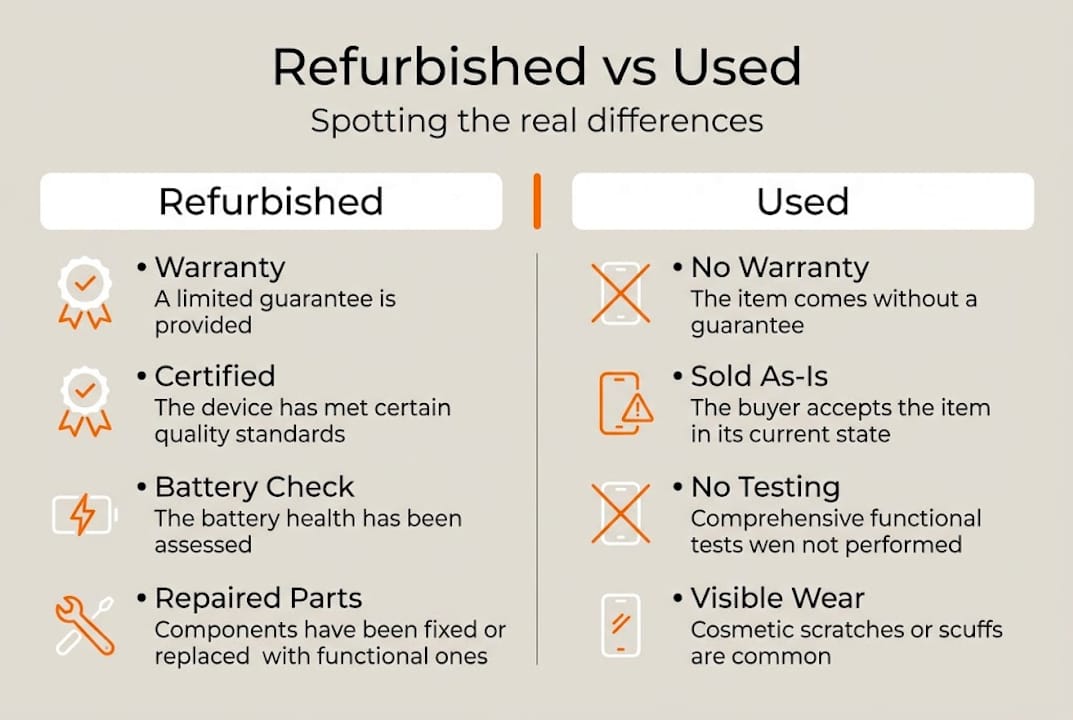
Used or pre-owned devices are sold as-is. There is no testing, no warranty, and no guarantee that anything works beyond what the seller claims. You are taking the device at face value.

Renewed is a term used by specific retailers, most notably Amazon. It involves basic functional checks but the standards are not always consistent or transparent. What counts as 'renewed' can vary significantly between sellers on the same platform.
Remanufactured is the most rigorous category. The device is fully disassembled, rebuilt using original equipment manufacturer (OEM) parts, and tested against the manufacturer's original specifications. Manufacturer-refurbished devices use OEM parts, rigorous standards, and include warranties, while used and pre-owned options offer none of that.
Key points to remember when comparing options:
- Refurbished gives you professional restoration with grading and warranty protection.
- Used gives you the device in its current state with no accountability.
- Renewed is retailer-specific and requires closer scrutiny of the seller's standards.
- Remanufactured offers the highest rebuild standard, closest to buying new.
Certified refurbishment programs consistently show lower failure rates compared to uncertified or used alternatives, delivering real savings without hidden reliability risks.
If your goal is saving on electronics without compromising on reliability, certified refurbished or remanufactured are the categories worth focusing on.
European regulations: Safety, transparency, and standards
Europe has some of the strongest consumer protections in the world, and refurbished electronics fall squarely within their scope. Knowing which regulations apply helps you shop with confidence and hold sellers accountable.
The most significant recent development is the General Product Safety Regulation (GPSR), which became effective in December 2024. It requires sellers to disclose the full scope of refurbishment, meaning they must clearly state what was tested, repaired, or replaced. Vague claims are no longer acceptable under this framework.
Here is an overview of the key European regulations affecting refurbished electronics:
| Regulation | What it covers | Impact on buyers |
|---|---|---|
| GPSR (2024) | Refurbishment disclosure, safety checks | Sellers must be transparent about restoration scope |
| WEEE Directive | Take-back programs, labeling | Supports e-waste reduction and proper disposal |
| Waste Framework Directive | Environmental and safety standards | Ensures safe handling of components |
The GPSR, WEEE, and Waste Framework together create a layered system of mandatory disclosure, CE marking requirements, and environmental accountability for refurbished consumer electronics.
Beyond legislation, leading marketplaces like Back Market require sellers to meet professional grading standards and provide documented refurbishment reports. This creates an additional layer of quality assurance on top of legal requirements.
What this means in practice for you:
- CE marking must be present on refurbished devices sold in the EU.
- Sellers must disclose what was and was not refurbished.
- Take-back labeling ensures you know how to dispose of old devices responsibly.
- Warranty periods must be clearly stated at the point of sale.
Pro Tip: Before completing any purchase, check for CE marking on the product listing and confirm the warranty duration. A minimum of 12 months is standard for certified refurbished devices in Europe.
For buyers interested in the broader picture, our guides on EU sustainable electronics and the eco friendly gadget guide offer useful context on how refurbished devices fit into responsible consumption.
Why buy refurbished? Benefits, risks, and tips for families and tech-savvy shoppers
The case for buying refurbished is strong, but it is not without nuance. Understanding both sides helps you make a decision that fits your household's needs and budget.
The financial case is clear. The global refurbished market exceeded USD 70 billion in 2025, with European buyers consistently accessing savings of 20 to 70 percent compared to buying new. For families upgrading multiple devices, that difference adds up fast.
The environmental case is equally compelling. Refurbished devices generate significantly less carbon than manufacturing new ones. HP's data shows their refurbished devices emit 57 to 63 percent less carbon than new equivalents. Choosing refurbished directly reduces e-waste and extends the useful life of existing hardware.
Key benefits at a glance:
- Savings of 20 to 70 percent versus new retail prices.
- Lower carbon footprint and reduced e-waste contribution.
- Access to premium devices at mid-range prices, ideal for family upgrades.
- Warranty and grading transparency in certified programs.
However, real risks exist and should not be ignored:
- Variable quality: Not all refurbished sellers apply the same standards. Generic claims without grading are a warning sign.
- Battery health: A device with a battery below 80 percent capacity will degrade faster and may need replacement sooner.
- Warranty gaps: Some sellers offer 30 to 90 days only. Always confirm the warranty covers at least 12 months.
For families buying a first smartphone for a teenager or upgrading a home laptop, the electronics home buying guide outlines what specifications to prioritize. And before you buy, reviewing the electronics warranty guide ensures you understand exactly what protection you have.
Pro Tip: For families and tech-savvy buyers, prioritize manufacturer-certified programs or established graded marketplaces. These consistently deliver the reliability and warranty coverage that generic 'refurbished' listings often cannot.
The uncomfortable truth most retailers won't tell you about 'refurbished'
Here is something worth saying plainly: the word 'refurbished' is one of the most abused terms in consumer electronics retail. Any seller can apply it to a device that received nothing more than a factory reset and a wipe-down. Without grading documentation, a refurbishment checklist, and a clear warranty, the label means very little.
The risks of third-party quality are real, and the absence of a standardized EU definition has historically allowed loose interpretations to persist. The GPSR helps, but enforcement takes time.
What actually protects you is choosing manufacturer-certified programs or established graded marketplaces with documented standards. These are not just marketing distinctions. Certified programs show measurably lower failure rates and provide genuine savings without hidden reliability risks. That is the standard worth holding every refurbished purchase to.
For anyone serious about smart electronics savings, the shortcut of buying the cheapest 'refurbished' listing rarely pays off. The extra scrutiny upfront saves you money and frustration over the device's lifetime.
Explore top-rated refurbished deals and accessories
Now that you understand the full picture on refurbished electronics, take the next step and explore deals that actually meet the standards outlined in this guide. At OnlineStore24 EU, we source products from established European distributors, with clear grading, warranty support, and fast delivery across the EU.

Whether you're looking to upgrade your home tech or find the right accessories to go with your next device, our catalog covers a wide range of options. From practical tools like Kenwood accessories to smart savings solutions like the digital moneybox, you'll find reliable products backed by the quality standards you now know to look for. Shop with confidence and make your next upgrade count.
Frequently asked questions
What is the difference between refurbished and used electronics?
Refurbished devices are professionally restored, tested, and graded with warranties included, while used electronics are sold as-is with no quality checks or guarantees. The distinction directly affects reliability and buyer protection.
Are refurbished electronics regulated in Europe?
Yes. GPSR mandates refurbishment scope disclosure, requiring sellers to clearly state what was inspected, repaired, and replaced, alongside mandatory safety checks and CE marking requirements.
How do I check the quality of a refurbished device?
Look for manufacturer certification, a cosmetic grade (A, B, or C), battery health between 80 and 90 percent, and a warranty of at least 12 months. European marketplaces enforce grading and battery health standards as baseline requirements.
Do refurbished electronics offer environmental benefits?
Yes. Buying refurbished cuts e-waste and carbon emissions by over 50 percent compared to new devices. HP refurbished devices emit 57 to 63 percent less carbon, making refurbished a genuinely sustainable choice for European consumers.