
Many assume all tech gadgets harm the environment, but eco friendly gadgets minimize impact through thoughtful design, sustainable materials, and energy efficiency. Understanding what makes a gadget eco friendly empowers you to make greener choices that benefit both the planet and your wallet. This guide explains the features, benefits, innovation, and practical selection tips you need to navigate the growing market of sustainable technology in Europe today.
Table of Contents
- Defining Eco Friendly Gadgets: Features And Environmental Benefits
- Comparing Popular Eco Friendly Gadgets: Solar Power, Smart Batteries, And Circular Design
- European Market Trends And Environmental Impact Of Electronic Gadgets
- Choosing And Using Eco Friendly Gadgets: Practical Tips For European Consumers
- Shop Eco Friendly Gadgets At OnlineStore24 EU
- Frequently Asked Questions
Key takeaways
| Point | Details |
|---|---|
| Eco friendly gadgets reduce environmental impact | They use energy-efficient technologies, recyclable materials, and renewable energy integration to minimize carbon footprint. |
| Repairability and longevity matter | User-replaceable batteries and high repairability scores extend device lifespan and reduce electronic waste. |
| Circular business models enhance sustainability | Renting, refurbishing, and reselling strategies keep gadgets in use longer and cut waste significantly. |
| European e-waste recycling lags behind sales | Despite market growth, less than 30% of electronic waste by weight is recycled or reused. |
| Smart energy management saves money | Modern eco friendly devices optimize electricity usage, reducing bills while supporting grid stability. |
Defining eco friendly gadgets: features and environmental benefits
Eco friendly gadgets focus on reducing carbon footprint through energy-efficient technologies that consume less power during operation and standby. These devices often incorporate recyclable and non-toxic materials in their construction, avoiding hazardous substances that complicate disposal and recycling. Repairability scores and user-replaceable batteries increase lifespan and reduce waste by making it easier and cheaper to fix devices rather than discard them. Integration with renewable energy sources like solar panels enhances sustainability by allowing gadgets to run on clean power instead of grid electricity.
Smart energy management systems optimize usage patterns and reduce electricity costs by scheduling charging during off-peak hours and discharging during peak demand. This not only saves money but also supports grid stability and reduces reliance on fossil fuel-based power generation. Many eco friendly gadgets now feature transparent sustainability certifications that verify environmental claims, giving you confidence in your purchasing decisions.
"Sustainable ICT requires long-term thinking, inclusive design, smart regulations and engagement from all stakeholders."
When evaluating gadgets, look for clear indicators of environmental responsibility:
- Energy Star or equivalent European energy efficiency labels
- Modular designs that allow component upgrades without replacing entire devices
- Manufacturer take-back programs for end-of-life recycling
- Low standby power consumption ratings
- Transparent supply chain and conflict-free material sourcing
Pro Tip: Look for gadgets with clear sustainability certifications and repairability labels to ensure your purchase genuinely minimizes environmental harm and maximizes long-term value.
The shift toward sustainable digital future requires collaboration between manufacturers, policymakers, and consumers to create a technology ecosystem that prioritizes longevity, efficiency, and responsible resource use. By choosing eco friendly gadgets, you actively participate in this transformation while enjoying cutting-edge technology that performs as well or better than conventional alternatives.
Comparing popular eco friendly gadgets: solar power, smart batteries, and circular design
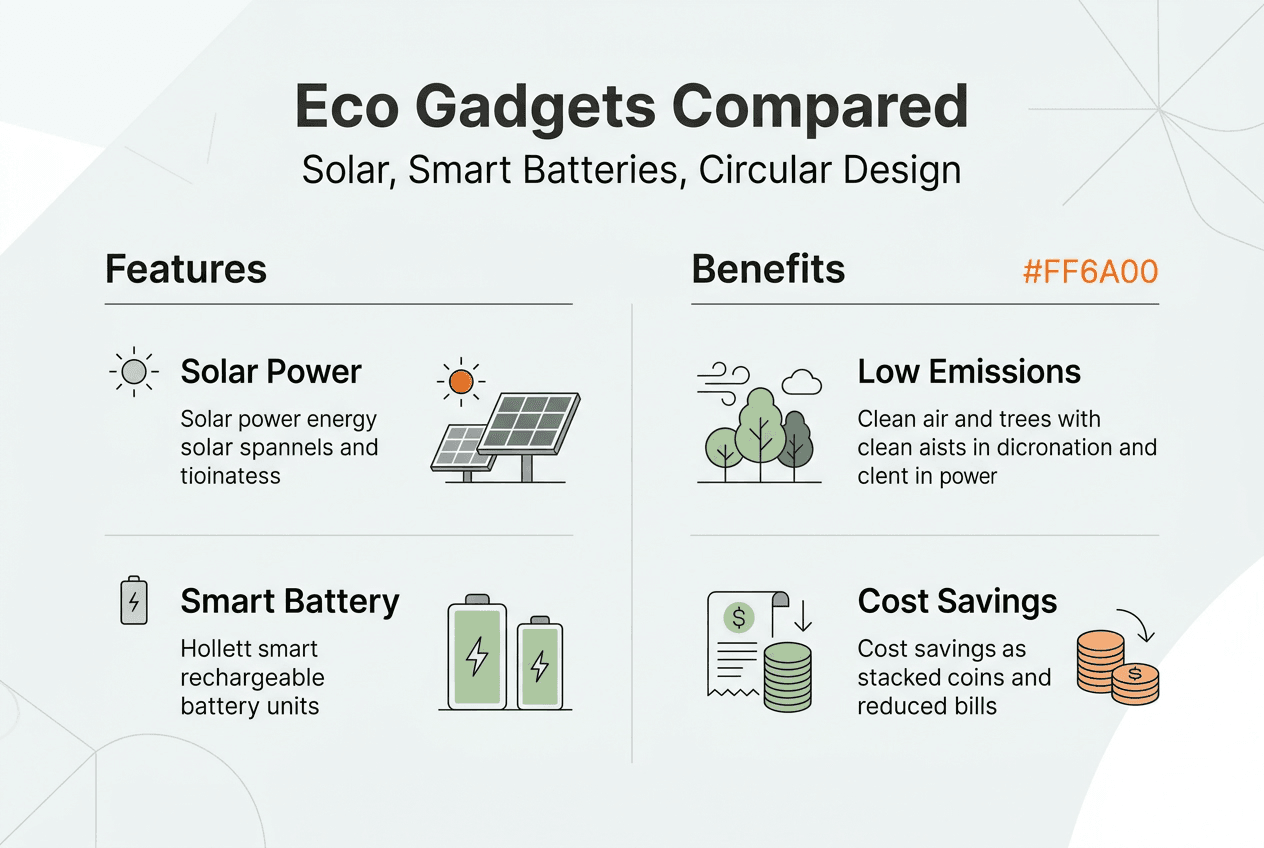
Solar-powered gadgets store and use renewable energy, reducing grid dependency and lowering your electricity bills over time. Devices like solar chargers, outdoor lighting, and portable power stations harness sunlight to operate independently of the electrical grid, making them ideal for both everyday use and emergency backup. Smart batteries like the FOSSiBOT FBP1200 maximize solar usage by supporting up to 2000W solar input with six solar panels, offering a 10-year warranty, and saving €837 annually through intelligent energy management.
Circular business models extend lifecycle through renting, refurbishing, and reselling, cutting waste by keeping devices in productive use longer. These approaches reduce the need for new manufacturing, which accounts for the majority of a gadget's carbon footprint. Research shows that circular business models improve sustainability through strategies that prioritize reuse over disposal, creating economic value while minimizing environmental impact.
| Approach | Key Features | Typical Lifespan | Annual Cost Savings | Environmental Benefit |
|---|---|---|---|---|
| Solar Integration | Renewable energy storage, grid independence | 10-15 years | €500-€850 | Zero operational emissions |
| Smart Batteries | Energy optimization, peak shaving, warranty | 10+ years | €400-€900 | Reduced grid demand, lower CO2 |
| Circular Models | Refurbish, resell, rent programs | Extended 5-10 years | Varies by model | 50-70% waste reduction |
| Conventional Gadgets | Standard grid power, limited repair | 3-5 years | None | High waste, emissions |
The comparison reveals that eco friendly approaches deliver superior long-term value while dramatically reducing environmental impact. Solar-compatible devices eliminate ongoing energy costs after the initial investment, while circular models make premium technology accessible at lower prices through refurbished options. Smart battery systems combine both benefits by storing solar energy and optimizing grid usage based on real-time electricity pricing.
Key considerations when choosing between approaches:
- Solar works best with consistent sunlight exposure and space for panels
- Smart batteries offer maximum flexibility for energy management and backup power
- Circular models provide affordable access to high-quality refurbished devices
- Combining approaches multiplies benefits, such as solar panels with smart batteries
Pro Tip: Consider devices with integrated energy management for maximum eco and cost efficiency, especially if you plan to expand your sustainable tech ecosystem over time.
The growing availability of electronics for modern homes in Europe reflects increasing consumer demand for sustainable options that deliver both environmental and financial benefits. Manufacturers respond by developing more sophisticated eco friendly features and making them standard rather than premium add-ons.
European market trends and environmental impact of electronic gadgets
The EU electronic device market grew from 7.6 to 14.4 million tonnes between 2012 and 2022, nearly doubling in just one decade and creating enormous waste management challenges. This explosive growth reflects increasing digitalization across all aspects of life, from work and entertainment to home automation and personal health monitoring. However, recycling and reuse lag severely behind sales growth, with only 4 million tonnes recycled or prepared for reuse as of 2022, representing less than 30% of total waste by weight.

High CO2 emissions result from manufacture, shipping, and disposal, exemplified by shared e-scooters which emit 115.6 kg CO2eq each across their lifecycle. Manufacturing accounts for the largest share of emissions, followed by shipping and end-of-life disposal. The study reveals that emission factors vary significantly based on trip frequency and the carbon intensity of electricity used for charging, highlighting the importance of both utilization rates and clean energy sources.
| Metric | 2012 | 2022 | Change |
|---|---|---|---|
| EU Market Volume | 7.6 million tonnes | 14.4 million tonnes | +89% |
| Recycled/Reused | ~2.5 million tonnes | 4.0 million tonnes | +60% |
| Recycling Rate | ~33% | ~28% | -5 percentage points |
| CO2 per Device (e-scooter example) | N/A | 115.6 kg CO2eq | Manufacturing dominant |
Improved utilization and decarbonizing electricity can lower lifecycle emissions substantially by reducing the per-use environmental cost and eliminating operational carbon footprint. When devices are used more frequently and powered by renewable energy, the fixed emissions from manufacturing are spread across more value delivery, improving overall sustainability. This principle applies across all electronic gadgets, from smartphones to smart home systems.
Environmental challenges facing European tech consumers:
- Rapid obsolescence driven by software updates and marketing rather than hardware failure
- Limited repair options and high service costs encourage replacement over repair
- Insufficient collection infrastructure for small electronic devices
- Export of e-waste to regions with inadequate recycling facilities
- Growing energy consumption from always-on connected devices
The gap between sales growth and recycling rates underscores the urgent need for sustainable tech adoption and better end-of-life management. Policy initiatives like the EU's Right to Repair legislation and repairability scoring aim to address these challenges, but consumer choices remain critical. By selecting eco friendly gadgets with longer lifespans and better recyclability, you directly contribute to closing this gap.
Exploring electronics buying guides Europe 2026 helps you identify products that balance performance with sustainability, ensuring your technology investments support rather than undermine environmental goals.
Choosing and using eco friendly gadgets: practical tips for European consumers
Check for sustainability certifications and repairability ratings before purchase to ensure devices meet verified environmental standards and can be economically repaired when needed. The EU now requires repairability scores on energy labels for smartphones and tablets, making it easier to compare products based on their expected lifespan and repair costs. These scores consider factors like battery replaceability, availability of spare parts, and ease of disassembly.
Prioritize gadgets that offer smart energy management to reduce consumption and costs through automated optimization of charging and discharging cycles. The FOSSiBOT FBP1200 integrates with smart electricity meters to charge at lowest rates and discharge during peaks, maximizing savings while supporting grid stability. This intelligent approach can reduce your electricity bills by hundreds of euros annually while extending battery lifespan through optimal charging patterns.
Consider solar-compatible devices and smart batteries with warranties and long lifespan to ensure your investment delivers value over many years. Look for manufacturers that stand behind their products with substantial warranty periods, typically 10 years or more for quality battery systems. This commitment indicates confidence in durability and provides financial protection against premature failure.
What to check in product specifications:
- Energy consumption in active and standby modes
- Battery chemistry and expected cycle life
- Availability of replacement parts and repair documentation
- Compatibility with existing smart home systems
- Software update policy and expected support duration
- Packaging materials and manufacturer recycling programs
Steps to optimize usage and maximize benefits:
- Install energy monitoring systems to track consumption patterns and identify optimization opportunities.
- Schedule charging during off-peak hours when electricity rates are lowest and renewable energy is abundant.
- Enable smart discharge features to reduce grid demand during peak periods and earn potential incentives.
- Maintain devices according to manufacturer guidelines to ensure maximum lifespan and performance.
- Update firmware and software regularly to access efficiency improvements and security patches.
- Participate in manufacturer take-back programs when upgrading to ensure proper recycling.
Pro Tip: Regularly update firmware and software to optimize efficiency and security, as manufacturers often release improvements that enhance performance and reduce energy consumption over the device's lifetime.
The smart home devices guide 2026 provides detailed recommendations for building an integrated ecosystem of eco friendly gadgets that work together to minimize environmental impact while maximizing convenience and savings. By taking a systematic approach to technology adoption, you create a sustainable foundation that grows more valuable over time.
Shop eco friendly gadgets at OnlineStore24 EU
Ready to make sustainable technology choices that benefit both the environment and your budget? OnlineStore24 EU offers a carefully curated selection of eco friendly electronic gadgets with fast delivery across Europe, making it easy to find products that align with your values. Our catalog includes energy-saving smart home devices, solar-compatible batteries, innovative wearables like the Smartwatch Radiant RAS10504, and connectivity solutions such as the Wi-Fi Amplifier Trendnet TI-IG90 that optimize your home network efficiency.

We partner with trusted European suppliers who share our commitment to sustainable tech innovation, ensuring every product meets high standards for quality and environmental responsibility. Shop conveniently with secure payment methods, competitive pricing, and reliable delivery that brings cutting-edge eco friendly gadgets directly to your door. Transform your technology ecosystem today with products designed for a sustainable future.
Frequently asked questions
What makes a gadget truly eco friendly?
A gadget is truly eco friendly when it minimizes environmental impact through energy efficiency, sustainable materials, repairability, and responsible end-of-life management. Look for devices with verified certifications, low energy consumption, recyclable components, and manufacturer take-back programs. The combination of these factors determines overall sustainability more than any single feature.
How do repairability scores affect gadget sustainability?
Higher repairability scores mean easier, cheaper repairs and longer device life, directly reducing electronic waste and supporting circular economy goals. These scores are now included on EU energy labels for smartphones and tablets, helping you choose devices designed for longevity. A repairable device can last twice as long as a sealed alternative, cutting your environmental impact and costs in half.
Can solar-powered gadgets save money long-term?
Solar integration reduces electricity bills significantly over gadget lifespan, with payback periods often under three years when combined with smart energy management. The FBP1200 can save up to €837 per year and has a 2.8-year payback period, after which all savings are pure profit. Over a 10-year lifespan, total savings can exceed €8,000 while eliminating operational carbon emissions.
What is the environmental impact of electronic waste in Europe?
Electronic waste is growing rapidly, with EU e-waste increasing from 7.6 million tonnes in 2012 to 14.4 million tonnes in 2022, overwhelming recycling efforts that manage only 4 million tonnes. This creates serious environmental and health hazards from toxic materials in landfills and incineration. Choosing sustainable, repairable, and reusable gadgets helps reduce environmental damage by extending device lifespans and improving recycling rates.
Are eco friendly gadgets as powerful as conventional devices?
Modern eco friendly gadgets match or exceed conventional devices in performance while using less energy and lasting longer. Advances in battery technology, processor efficiency, and smart power management deliver excellent user experiences without environmental compromise. Many eco friendly features like solar charging and energy optimization actually enhance functionality by providing backup power and reducing operating costs.
Recommended
- Best Electronics for Modern Homes in Europe (2026 Guide) – OnlineStore24 EU
- Complete Electronics & Lifestyle Buying Guides for Europe 2026 – OnlineStore24 EU
- Best Electronics for Modern Homes in Europe: Complete 2026 Buying Guide – OnlineStore24 EU
- Smart Home Devices Guide 2026: Transform Your European Home – OnlineStore24 EU