
TL;DR:
- AI features like live editing and offline translation are now standard in European devices.
- Edge AI processes data locally using NPUs, enhancing privacy and reducing latency.
- European market adoption of AI devices is rapidly increasing, focusing on privacy and security.
Live photo editing that takes less than a second. Voice translation that works with no internet connection. A TV that learns your viewing habits and adjusts picture settings automatically. These are not features from science fiction; they are standard in many devices sold across Europe right now. AI has moved from a marketing buzzword to the actual engine powering everyday electronics. For European consumers, this shift changes not just how devices perform but how you should shop for them. Understanding what AI actually does inside your devices helps you make smarter purchases and get more from the technology you already own.
Table of Contents
- Why AI matters in today's consumer electronics
- The tech beneath the surface: Edge AI, hardware, and algorithms
- Market forces: AI adoption and trends in Europe
- Balancing benefits and risks: European privacy, security, and the road ahead
- Fresh perspective: Why true AI value means looking beyond the specs
- Discover the best AI-powered electronics for your home
- Frequently asked questions
Key Takeaways
| Point | Details |
|---|---|
| Edge AI powers smarter devices | On-device AI delivers fast, private features in European electronics from smartphones to smart homes. |
| AI adoption is surging in Europe | The European AI consumer electronics market is growing rapidly, with major shifts in market share and offerings. |
| Privacy and security are top priorities | European buyers benefit from AI's privacy advantages but should stay alert to security and transparency risks. |
| Specs aren't everything | True AI value comes from trusted brands, strong privacy controls, and features that match your real needs. |
Why AI matters in today's consumer electronics
The word "smart" used to mean a device could connect to the internet. Today, it means something far more specific: a device that can process, learn, and respond in real time using artificial intelligence. That change is significant, and it is happening faster than most people realize.
The engine behind this shift is edge computing, which enables AI to run directly on your device rather than sending data to a remote server. This means features like live translation, smart photo editing, and voice assistants can work instantly, even offline. Samsung's Vision AI Companion, for example, uses on-device processing to recognize scenes, enhance images, and provide real-time captions without ever uploading your personal data.
The practical impact on daily use is hard to overstate. Here are some of the AI-powered features now standard in consumer devices:
- Live photo enhancement: Phones automatically detect lighting conditions and apply corrections before you even press the shutter.
- Voice assistants with context awareness: Modern assistants understand follow-up questions and remember earlier parts of a conversation.
- Real-time transcription: Smart TVs and laptops can transcribe spoken audio into on-screen text instantly.
- Personalized recommendations: Streaming devices and smart home hubs learn your preferences and surface relevant content or settings.
These features are no longer optional extras. They are becoming baseline expectations, especially among European buyers who are increasingly aware of how their data is used. The EU smart device adoption trend shows that privacy-conscious consumers actively prefer devices that handle AI processing locally.
The numbers back this up. Consumer electronics market growth data shows that 40% of global smartphones will be AI-enabled by 2027, a figure that reflects how quickly manufacturers are building AI capabilities into mainstream products. For anyone shopping for best smartphones in Europe, AI features are now a primary factor in choosing between models.
The tech beneath the surface: Edge AI, hardware, and algorithms
Once you understand why AI features matter, it helps to know how they actually work. The technology is more accessible than it sounds, and understanding it gives you a real advantage when comparing devices.

Edge AI refers to AI processing that happens on the device itself, not in the cloud. The key hardware enabling this is the NPU, or Neural Processing Unit. Unlike a traditional CPU (which handles general tasks) or a GPU (which handles graphics), an NPU is designed specifically to run AI calculations quickly and efficiently. This is why a modern smartphone can apply complex image processing in real time without draining your battery in minutes.
Key methodologies that make this possible include model quantization, pruning, federated learning, and specialized hardware like NPUs. Here is a simplified breakdown of how these work in practice:
- Model quantization: Reduces the precision of AI calculations (from 32-bit to 8-bit numbers, for example) so the model runs faster and uses less memory without losing much accuracy.
- Pruning: Removes unnecessary connections in an AI model, making it leaner while keeping its core capabilities intact.
- Federated learning: Allows devices to improve AI models using local data, then share only the learned improvements (not the raw data) with a central server.
- NPU optimization: Dedicated chips handle AI workloads far more efficiently than general-purpose processors, reducing both latency and power consumption.
Here is how edge AI compares to cloud-based AI across key performance areas:
| Feature | Edge AI | Cloud AI |
|---|---|---|
| Response latency | Very low (milliseconds) | Higher (depends on connection) |
| Power usage | Optimized for device battery | Offloaded to server |
| Privacy | Data stays on device | Data sent to external server |
| Offline functionality | Full or partial | Limited or none |
| Personalization speed | Immediate | Delayed by sync |
Recent trends in AI hardware show that NPU performance is doubling roughly every two years, which means devices bought today will handle more complex AI tasks than anything available just a few years ago. The privacy and performance benefits of this architecture are particularly relevant for European buyers.
Pro Tip: When comparing smartphones or smart TVs, look specifically for NPU specs in the product description. A dedicated neural processing unit is a strong indicator that AI features will run smoothly and privately on the device.
Market forces: AI adoption and trends in Europe
The technology is advancing quickly, and the European market is responding at pace. Understanding where the market stands right now helps you time your purchases and identify which product categories offer the best value.
Europe's AI consumer market is growing fast. The Europe AI market forecast projects the region's consumer AI sector to nearly triple by 2030, with a compound annual growth rate of 29.7%. Germany leads adoption among EU nations, driven by strong demand for smart home devices and AI-enhanced smartphones.
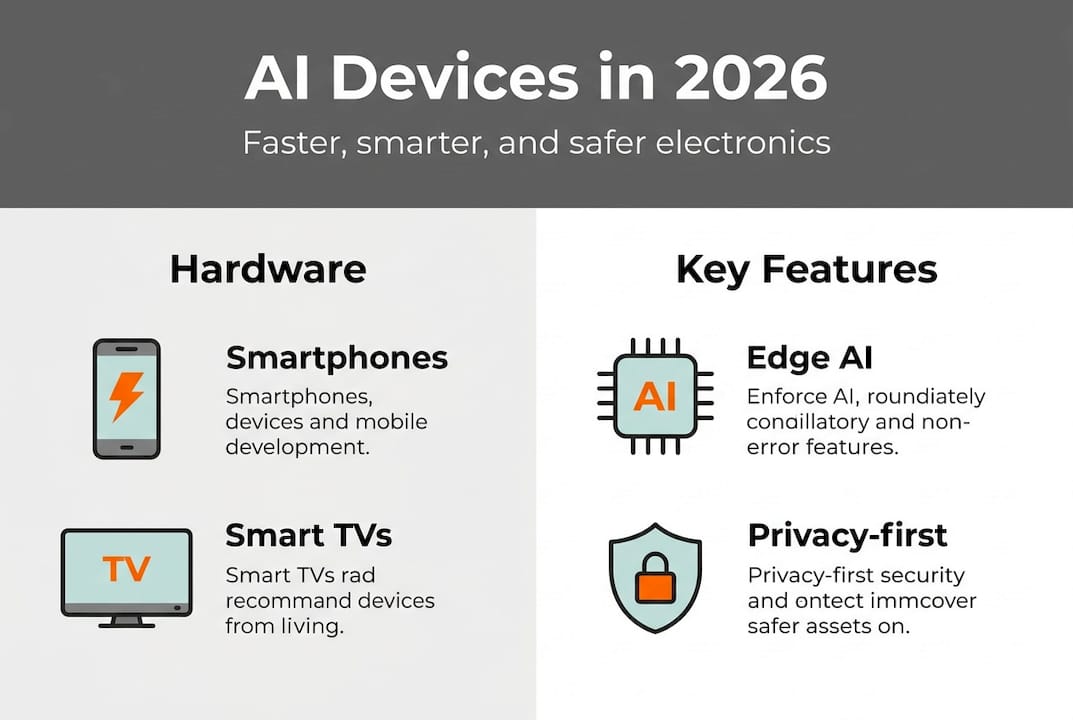
Here is a snapshot of AI adoption rates across device categories in Europe:
| Device category | 2024 AI adoption | Projected 2027 adoption |
|---|---|---|
| Smartphones | 28% | 40%+ |
| Smart TVs | 35% | 55% |
| Smart home devices | 22% | 42% |
| Laptops and PCs | 18% | 38% |
The AI smartphones 40% market by 2027 projection reflects a broader industry push, with the edge AI chip market expected to reach $80 billion by 2036. CES 2026 made this direction very clear, with Samsung and LG both unveiling next-generation AI TVs that combine on-device processing with selective cloud features for tasks like content search and smart home integration.
Key trends shaping European AI electronics purchases right now:
- GDPR compliance as a buying signal: European consumers increasingly check whether AI features comply with data protection rules before purchasing.
- AI chatbots for product research: More buyers are using AI-powered tools to compare specs and read reviews before visiting an online store.
- Hybrid cloud and on-device models: The newest devices use on-device AI for sensitive tasks and cloud AI for less personal ones, giving users more control.
- Sustainability focus: AI is being used to optimize energy consumption in smart home devices, a growing priority for European households.
For buyers looking at top mid-range smartphones, the good news is that AI features are no longer limited to flagship models. The EU electronics benefits of buying from EU-based retailers include faster delivery and better warranty support for these increasingly complex devices.
Balancing benefits and risks: European privacy, security, and the road ahead
AI-powered devices offer real advantages, but they also come with risks that deserve honest attention. A balanced view helps you choose devices that genuinely serve your needs rather than just sounding impressive.
Key advantages of edge AI in consumer devices:
- Personal data stays on your device and is not transmitted to external servers by default.
- Lower latency means features like voice recognition and photo editing respond instantly.
- Offline functionality keeps core AI features working without an internet connection.
- Reduced cloud dependency means fewer points of failure and less exposure to server-side breaches.
Real risks to be aware of:
- On-device AI can create new attack surfaces; a compromised device means AI models and personal data are both at risk.
- Battery drain is a genuine concern, particularly on older or budget devices running demanding AI workloads.
- Many manufacturers are vague about how AI models are trained and updated, creating transparency gaps.
- Regulatory compliance varies; not all AI features sold in Europe fully align with current GDPR requirements.
Benefits include privacy and low latency; risks are local attacks, battery drain, regulatory gaps — and this balance is exactly what informed buyers need to navigate.
Data from privacy-first AI design research highlights the scale of the challenge: 76% of AI-enabled consumer devices show high-risk transparency gaps, and 65% have inadequate vulnerability disclosure practices. These are not small numbers.
So how do you protect yourself? Start by checking a manufacturer's track record on software updates. Brands that release regular security patches take device safety seriously. Look for independent privacy audits or certifications, which are increasingly available for major product lines. Review the consumer electronics privacy settings on any new device before enabling AI features.
Pro Tip: Before activating AI features on a new device, spend five minutes in the privacy settings. Disable any data-sharing options you do not need, and check whether the manufacturer offers a clear privacy policy specific to AI functionality.
Fresh perspective: Why true AI value means looking beyond the specs
Spec sheets tell you what a device can do. They rarely tell you whether it does those things well, safely, or in a way that respects your privacy over time.
We see this regularly in the European electronics market. A device launches with impressive AI credentials, earns strong reviews at launch, and then quietly falls behind on software updates within 18 months. The AI features that made it attractive become liabilities as security patches stop arriving.
The smarter approach is to treat AI features the same way you would treat any long-term investment. Ask how often the manufacturer updates the AI model. Ask whether the privacy policy covers AI-specific data use. Look for third-party reviews that test real-world performance, not just benchmark scores.
The best electronics for European homes are not always the ones with the most AI features listed on the box. They are the ones where you understand what the AI is doing, you can control it, and the manufacturer has a credible commitment to keeping it secure. That is the standard worth holding every purchase to.
Discover the best AI-powered electronics for your home
If you are ready to put this knowledge to work, Online-Store24 makes it straightforward to find AI-enabled electronics that meet European privacy standards and deliver genuine everyday value. Our catalog covers everything from AI-enhanced smartphones to smart home accessories, all sourced from trusted EU distributors with fast delivery across Europe.

Whether you are upgrading your home network with a reliable solution like the Trendnet TEW-821DAP Access Point or looking for compatible accessories such as the Kenwood AT340 accessories, you will find competitively priced options backed by secure payment and EU-based fulfillment. Shop with confidence knowing every product meets the standards European buyers expect.
Frequently asked questions
What are the top AI features found in consumer electronics today?
Real-time photo editing, voice recognition, instant translation, and personalized recommendations are among the most common AI features in modern smartphones, TVs, and smart home devices.
How does edge AI protect my privacy better than cloud-based devices?
Edge AI processes data on-device, so personal information does not leave your home unless you specifically allow it, reducing your exposure to cloud-side data breaches.
Are AI-enabled devices more expensive than regular electronics?
AI devices may carry a small premium at launch, but AI chipsets are becoming standard even in budget and mid-range products, with costs falling steadily as production scales up.
What risks should I watch out for with AI-enabled devices?
76% of AI devices show transparency gaps and 65% have weak vulnerability disclosure; always review privacy settings and check for regular security update commitments before buying.
Recommended
- Smart consumer electronics tips for Europe 2026 | OnlineStore24 EU - Envío Rápido
- Advantages of consumer electronics for European homes 2026 | OnlineStore24 EU - Envío Rápido
- How cloud storage powers consumer electronics in Europe 2026 | OnlineStore24 EU - Envío Rápido
- Best Electronics for Modern Homes in Europe: Complete 2026 Buying Guide – OnlineStore24 EU